


INFRARED HEATERS
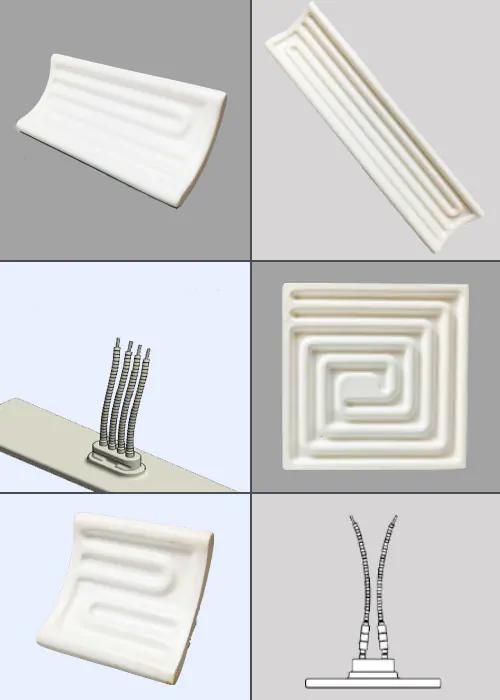
Infrared radiant heat energy can be delivered to concentrated areas at a very fast rate with individual heaters or heater arrays. Infrared ceramic emitters are made of refractory material in a protective glaze that prevents moisture and harmful fumes from entering the heater surface.
Common Applications
- Animal Warming
- Curing
- Food Production Processes
- Food Warming
- Heat Treating
- Moisture Removal
- Non-Contact Heating
- Paint Drying
- Plastics Heating

Infrared Heaters ECS have a dispersion angle of 75ºС, due to which they heat surfaces of a larger area than their counterparts. A classic example of the use of emitters is the molding of plastic products, heating and drying. Ceramic radiators are made from a specially developed composition of heat-resistant ceramics, Rescal rheostat wire is used as a heating element. The maximum operating temperature is 730ºС, and the maximum power is 1500 W.

Flat infrared radiators ECP are used as household heaters and in industrial heating. ECP emitters are made of high-temperature modern material, the maximum heating temperature of which is 750°C. The uniqueness of a flat radiator is in the uniform heating of a larger area, while the total heating time is reduced. Compared to other radiators, the ECP has an overall height that is approximately 45% lower than other heaters.
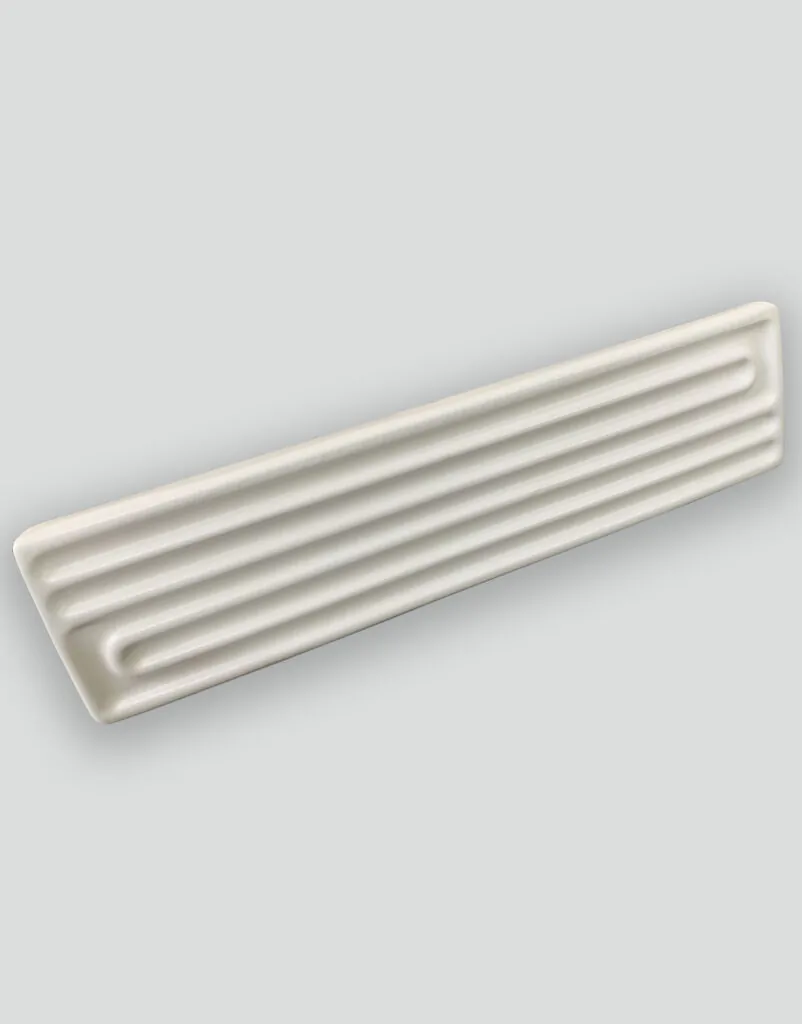
ECH hollow heaters have an operating heating temperature of 890°C and are mainly used in production for high-temperature heating. ECH heaters are manufactured by hollow casting. The air cushion inside the heater acts as a thermal insulation layer. Short heating times and high energy efficiency are the main advantages of the ECH radiator.
IR heaters produce light energy that enters the surrounding space. When compared with other sources of heat, there is a significant difference here: infrared space heating is carried out not by raising the air temperature, but by absorbing rays by solid objects (floor, ceiling, walls, furniture), which then „emit” the resulting heat. The heating element generates a range of waves that are within 78×10−8m … 10−3m.
To better understand how the waves are distributed, let’s take an example with a convector. It begins to transfer heat upwards, so it is usually placed at the bottom of the wall. The infrared device produces heat immediately: thanks to the all-round energy transfer, the room heats up in a couple of minutes.
The main elements are a heating lamp that creates radiant energy, and a reflector that redirects it in the right direction. The thermostat checks the heating level, and the disconnecting device is a sensor that, when the device reaches the temperature maximum, turns off the temperature increase.
TIPS FOR SELECTING MODELS
– When calculating the operating parameters, it is considered that 40-80 W of device power is sufficient per square meter.
– For closed premises with permanent residence, we recommend quartz and carbon equipment. When fast and short heating is required or it is planned to increase the temperature in an open space, halogen analogues will come in handy. This is due to the fact that halogen devices are capable of emitting short waves, which in a closed place cause physical discomfort in people.
– When there is not enough space in a room, garage, utility room, it is better to install a wall-mounted or ceiling-mounted appliance. This will also prevent it from tipping over.
– Fans of special conveniences are offered lamps for heating with remote control. Timing is useful for those who forget to pull the plug out of the socket during their absence or unwillingness to raise the temperature in the room. The timer will exclude spontaneous combustion of the heater during its long operation.