


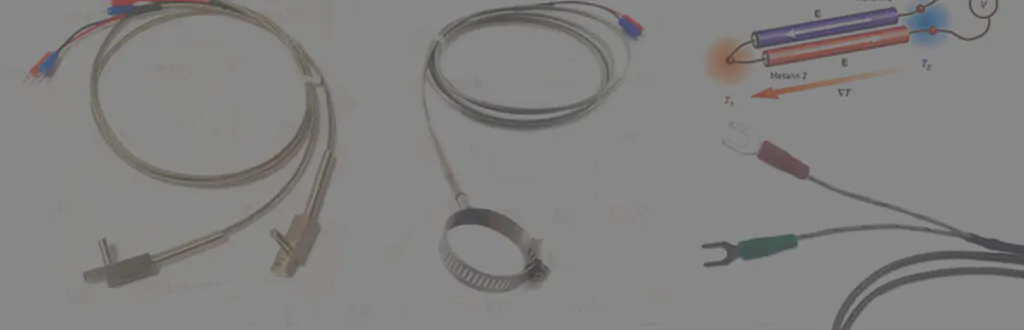
Modern manufacturing is an automatic system in which each process is monitored and adjusted within a specified range. The use of a thermocouple is necessary in processes that require a clear indication of performance. Special sensors called thermocouples are used. They are used over a wide temperature range to transform the energy of the heat generated into electrical energy.
What is a thermocouple
Two wires of different metals (alloys) are selected to create the device. The two ends are joined by welding or twisting. They form a hot junction. The remaining two ends are connected to the measuring device or control device using compensation wires. This side is the cold junction.
To prevent rapid deterioration of electrodes, they are encapsulated in a capsule filled with gas, liquid substance. For protective purposes, ceramic beads may be placed on the thermocouples.
How the thermocouple functions
The circuit is based on the principle of operation of the appearance of current in a closed-type electric circuit in the presence of two different conductors and a temperature difference between the two opposite junction.
When a voltmeter is connected in the circuit, it is closed. However, the EMF at the points of equal temperature junctions is balanced, so there is no current. If heat is added to the hot junction, a potential difference is formed, and an electric current is induced.

Which thermocouples are commonly found
The materials used for manufacturing have different melting points and react differently to oxidizing environments and temperature changes.
Base metals are suitable for temperatures up to +1400˚C, while noble metals are suitable for temperatures up to +1900˚C.
Base metals
- J – iron and constantan. It has low price, recommended for rarefied atmosphere. It is not allowed to be used below 0˚C and above +500˚C. The dangerous element is sulfur, contact with which leads to instant destruction of leads.
- T – copper and constantan. It is allowed to be used at minus temperatures, but +400˚C is critical. Not afraid of humidity, reacts well to the oxygen component. The leads have undergone annealing stage to normalize the homogeneity of the composition.
- K – chromel and alumel. Wide range (-100…+1000˚C). Used in air environment where there is a medium or increased concentration of oxygen. In an environment close to a vacuum environment, chromium migrates out of the compound, causing the temperature readings to be inaccurate. Similarly, it is undesirable to use type K in +200…+500˚C mode.
- E – chromel and constantan. Participates in the measurement of low temperatures. The homogeneity of each electrode is distinguished, so it is possible to measure accurate temperature values.
- N – nichrosil and nisil. The prototype was the K thermocouple. Here the idea of adding silicon is realized, which reduces the subsequent contamination of the thermocouple during operation. The limit temperature is +1200˚C, but the exact value is determined by the electrode diameter. The error in measuring values at t= +200…+500˚C is much smaller than in type K. This is a refined type of thermocouple, which is considered to be one of the best among base metals.
Noble metals
- S – platinum with rhodium and platinum. Capable of working in normal and oxidizing environment. Recommended operating range: +400…+1350˚C, short-term period allows temperature rise up to +1750˚C. After reaching +900˚C it becomes contaminated with carbon, silicon, hydrogen. Electrodes are placed in tubes made of aluminum oxide, without impurities.
R – thermocouple, similar to the previous one, with maximum operating temperature up to +1700˚C, and average +1200…1400˚C.
B – platinum with rhodium and platinum with rhodium. Gives inaccurate readings at t < +600˚C. The “cleanest” range: +600…+900˚C. Further contamination occurs with silicon, hydrogen, iron and copper.
Types of junction
There are 6 variations of jaws that consist of 1 or 2 elements.
- A single junction not touching the hull is marked with the letter I.
- If it is in contact with the enclosure, it is labeled H.
- A pair of junctions not touching each other or the inside of the hull is labeled II.
- A twin junction with one common top, not touching the hull is labeled 2I.
- Two separate junctions, one touching the case and grounded – IH.
- Both junctions without insulation, connected to the housing – HH.

Types of thermocouples by operating parameters
- Media contact: standard, sealed against moisture, operating in aggressive environments, capable of measuring in explosive atmospheres.
- Location: surface mounted, immersed in the medium.
- Place of installation: designed for stationary position without moving and resistant to vibration.
- Inertia value: 10 s to a non-standardized value.
- Number of zones: single and multi-zone.
- Application features:
- for fasteners and portable;
- for short-term installation and permanent use.
- Type of thermocouples on one object: single, double and triple.
- Type of junction: insulated from metal, non-insulated.
- Contact with medium: hermetic version, non-hermetic.
What are multipoint thermocouples
Multi-point thermocouples are useful when there is a need to measure simultaneously in different locations of the same medium. Their task is to determine the thermal values along the axis of the transmitter.
There is no process without temperature fluctuations during heating. Measuring parameters in one place does not guarantee their stability in another. Thermocouples with up to 60 collection points are used to ensure parameter control. The design has only 1 metal bulb and 1 input point.

What can be said about the disadvantages and advantages of thermocouples
Positive options
- Application of devices in various environments, including aggressive ones.
- Significant temperature range of operation: -250˚C to +1900˚C and above (critical value reaches +2500˚C).
- Accuracy of measurements, the error is 0.01-2˚C.
- Affordable cost.
- Reliability in use.
Negative aspects
- The more equipped with additional options and connectors, the more expensive it will cost to purchase a thermocouple.
- Availability of factory calibration.
- The need to install shielding protection and high-precision sensors.
- Inability to eliminate and correct the non-linear dependence of EMF during temperature rise when it exceeds the limiting limits.
Tips from the thermocouple manufacturer
- Use a miniature device made of thin wire. Place it in the measuring area and add extension wires outside.
- The thermocouple wire should be free of tension and vibration effects.
- There should be no significant thermal jump along the length of the thermocouple.
- Boundary temperatures should not be used as operating temperatures, on a regular basis. Select thermocouples with a 10-15% margin of thermal index.
- When selecting a large cross-section wire, make sure that it will not introduce a change in the temperature of the measurement medium.
- In case of considerable wire and thermocouple lengths, the wires to be connected are additionally twisted at the terminal point.
- If the medium is aggressive, use a sufficiently resistant bulb material for the wires.
- The use of complex thermocouples with several electrodes is convenient for simultaneous measurement of several parameters: temperature, current flow interference, voltage measurement, bulb tightness check.
