


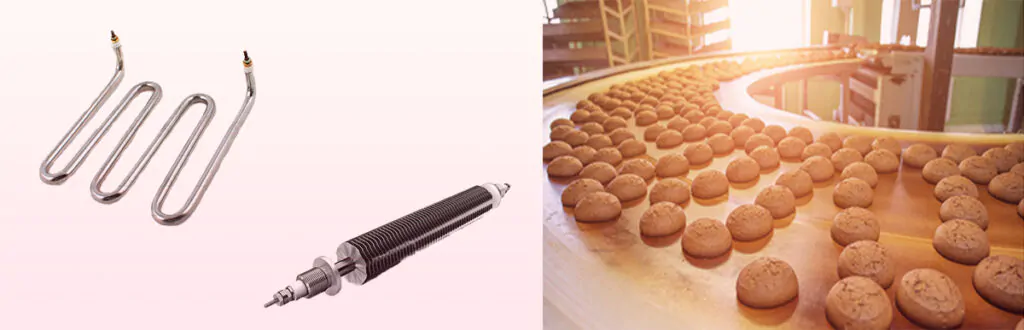
When people tasted the taste of food cooked over a fire, they gave up raw food. For a long time they used ovens, and after the advent of electricity, they began to use convenient stoves. Then the food industry was created. Thanks to it, they were able to process agricultural crops in large quantities, preserve products by heat treatment, and create low-alcohol drinks by fermentation.
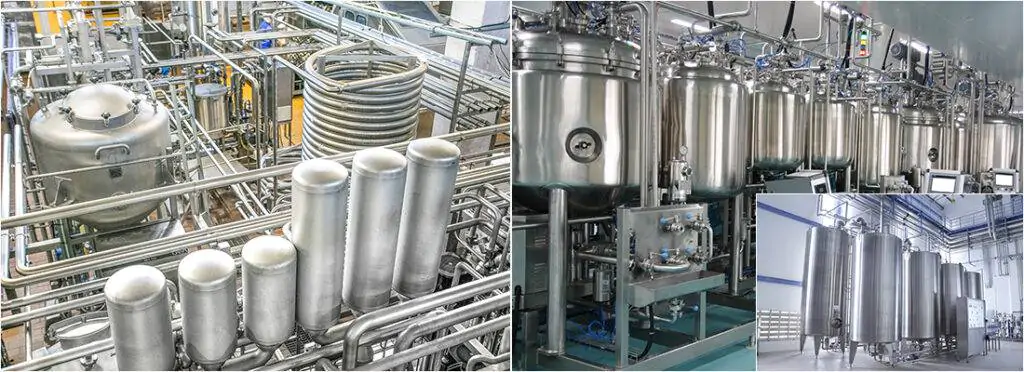
High temperature treatment helps to neutralize bacteria that would lead to food poisoning. It prevents pathogens from developing, prevents rotting processes, and extends the shelf life of food.
Where the installation of heaters is necessary
Devices are used for:
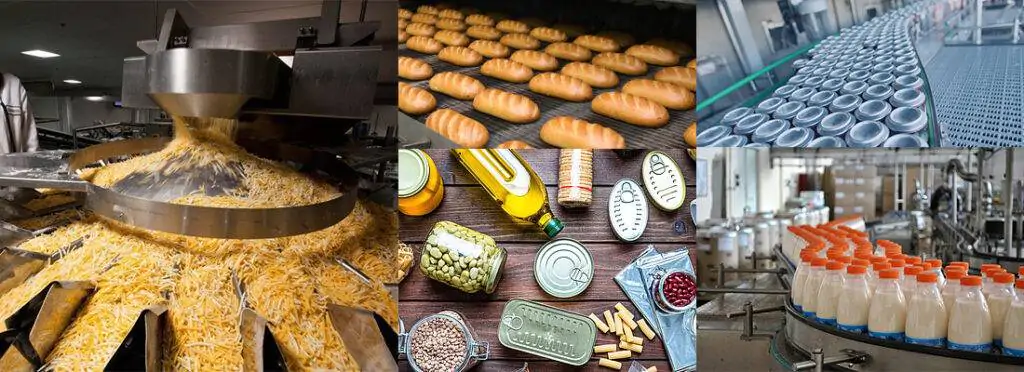
- confectionery, bread, dry baking, chocolate;
- Milk products;
- mayonnaise;
- jams, jams, jellies;
- juices, nectars;
- canning;
- smoking and frying of fish, meat, sausages;
- Chebureks, doughnuts, pancakes, French fries;
- grilled food, etc.
If you need to simmer or boil something, water heaters will be useful. For processing in oil, dry smoke, slightly different analogs are used
Achieving quality heat transfer in food processes
Heat is required to achieve different results.
- Pasteurization, sterilization. Many people are familiar with the processes involved in the preparation of milk. Sterilization refers to the preparation of packaging containers for preservation, as well as the products themselves. Pasteurization is heated to +70…+85℃, and sterilization is performed at t > +100℃. Dry and wet processing is used, which helps to increase the shelf life of products.
- Partial dehydration and final drying. Due to the thermal effect, water begins to evaporate. Treated fruits, vegetables, ramen, nuts can be stored for several months.
- Food with a short shelf life. The components are boiled, fried, baked and sent immediately for sale. These types of food can be found in supermarkets (ready meals are sold within a day).
Heat treatment also involves convective, conductive exchange, infrared radiation. Below we will consider what interferes with the full-fledged heat transfer process.
What is meant by buildup
Different factors can reduce the thermal effect: from unstable voltage in the network, which affects the heating power, to weak insulation, due to which the heat is abundantly dissipated outside.
One of the important indicators that negatively affect the performance of heating elements is considered to be contamination from the surface. There are 4 types of buildup:
- Corrosion. Regular exposure to an environment of chemical reactions can change the appearance of many materials. Therefore, it is important to choose heaters made of oxidation-resistant metal from the outset, or to place oxidation-sensitive devices in an airtight, antioxidant sheath;
- biological masses. There are always microorganisms in water. They are initially invisible, but over time they accumulate on the heating elements, forming a film-like layer. This also reduces the thermal effect of the equipment;
- sediment buildup. Since non-distilled water is used, it has salts in it. These are heavier than water, so they accumulate on the bottom and any objects lowered into the liquid medium;
- solid layers. When the temperature rises, the reaction of the formation of lime and other chemical substances that settle on the heating element intensifies. The substances turn into scale and crystallize.
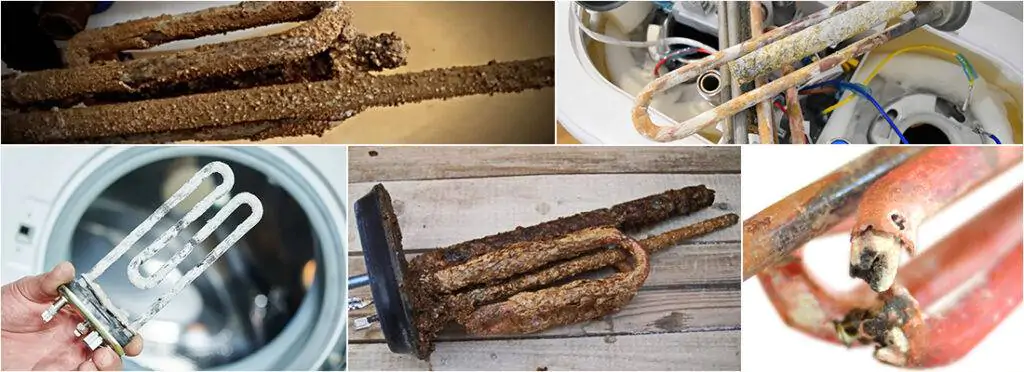
All of the above points cause a reduction in heat flux transfer. This means that heating is slower or with insufficient thermal value. Increasing the power of the equipment leads to increased loads on the equipment and significant energy consumption. As a result, the physical ageing of the heating elements occurs faster and the heating devices need to be replaced more frequently. As a result, the annual cost of the production process increases, and this affects the final cost of processed products.
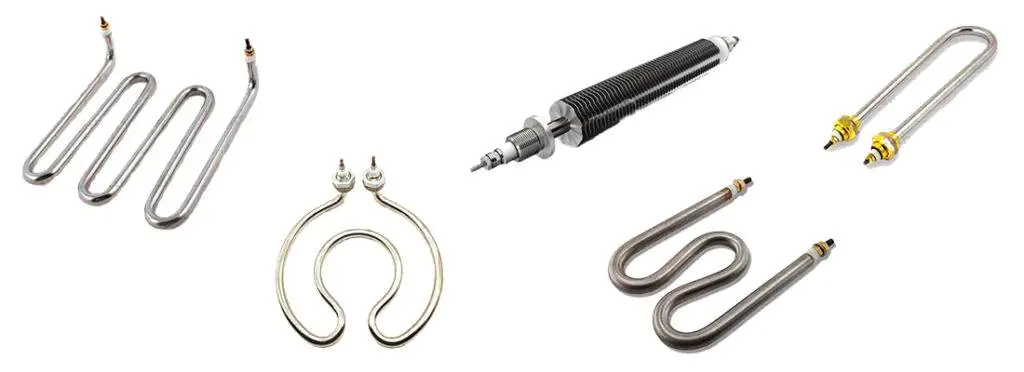
Features of tubular heating elements used in the food industry
Cooking food and beverages is accompanied by many chemical reactions. Heaters in this case are used “dry” and “wet” type. It is important that the products are certified, free of harmful impurities and non-stable inclusions.
The correct choice of materials for the heaters helps to achieve the thermally designed performance. Stainless and carbon steels, copper, titanium are durable, not subject to temperature and acid degradation. And if they are placed in a protective sheath, increased structural stability of heaters is ensured.
To reduce the degree of adhesion of mineral salts and products of chemical transformation, it is desirable to wrap the working areas of heaters with a hermetic sheath.
Magnesium oxide is added to the heating elements. It not only separates the resistive element from the housing, but also serves as an excellent conductor of thermal energy. This increases the operating potential of the heater. It is no longer necessary to add power to the device.
Thermal processes in the food industry involve the processing of products over a fairly wide range. Heating of gaseous, liquid phase, solids is performed up to a temperature of +750℃. Air and water heaters are available in a wide range of sizes. This helps in individual selection of necessary components.
Added benefits of using tube heaters in the food industry
There are at least 2 reasons why it is advantageous to use tubular configuration heaters.
- Fast heating time. Heat transfer is optimized by selecting the best combination of materials to perform thermal processes. The minimum possible time is spent to raise the temperature, speeding up the product processing cycle and reducing production costs.
- Ability to achieve precise thermal values. The presence of sensors and thermocouples makes it easy for line operators to check actual temperature values. The absence of fluctuations in degrees creates the necessary conditions for proper product processing, helping to eliminate hazards and preserve the beneficial components.
Although sticking on the surface of the heating elements is a problem, these devices show high operating efficiency. The contaminants have to be cleaned so that the heaters can function fully again. Surface protection coatings and closed shells help to reduce the rate at which foreign matter contaminates the heating elements. The quality of the processed products is not compromised.
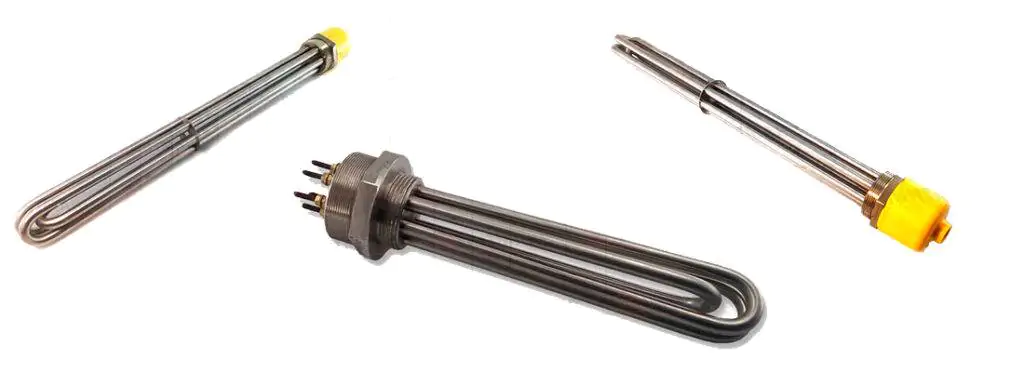
Submersible heaters in demand in the food processing industry
The heating elements are in direct contact with the medium, which increases the distribution rate of the heat energy produced. They are characterized by their compact design and easy maintenance.
They are used for such processes as:
- Pasteurization. Salmonellosis, botulism and E. coli cause a lot of trouble. After gentle heat treatment (short-term exposure temperature does not exceed +90℃, exposure time starts from 15 seconds), bacilli lose their poisoning ability and die. Not only dairy products, but also meat and fish products are treated in this way.
- Ultrapasteurization. Its task is to extend the period of use of products. When milk is heated for 2 seconds to t > +135℃ and instantly cooled to +5℃, all pathogens disappear.
- Blanching. The process consists of quickly scalding vegetables, cereals with boiling water, and then cooling them sharply. Also, this method is used to treat meat with bones, nuts. The time lasts from 1 to 5 minutes. Products almost do not lose vitamins, save the initial color, retain the density of the structure. Blanching removes the natural bitterness, helps to remove the skin, makes vegetables less absorbent fats. This is often how vegetables are prepared for freezing.
- Sterilization. Good for foods with low acidity and a long shelf life. It is carried out with consideration of gradual heating, the final limit exceeds +100℃. This is how infant nutritional formula sold in canned form is produced. Small organisms lack immune defenses, so for them food is treated with special care.
- Supersterilization. At a temperature of +120…+130℃, viscous liquids are affected for a few seconds.
Who can benefit from immersion heaters
Immersion type heat generating devices are convenient because they can be easily pulled out after the food process is finished. They are used in large batch plants, baby food production enterprises, small firms specializing in food activities.
Intmax produces tubular and immersion heaters with regard to their specialized use. We work with each client separately, perform calculations for a specific production project. This allows us to produce heaters that are fully suitable for the conditions of use. Contact Intmax managers and they will advise you on further stages of interaction.