


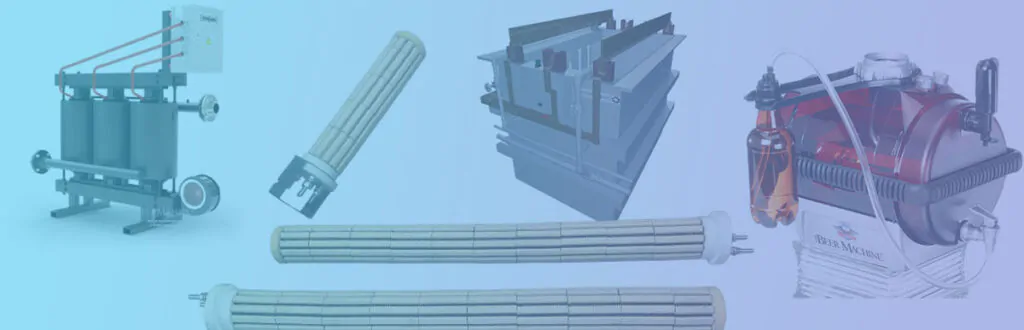
Ceramic heating element are used in many areas of human activity. Let’s consider where dry heaters are used first.
I. Brewing industry
Significant demand for beer combined with a wide offer from different brands forces «to keep the brand» and to produce a high-quality foam product. The process of brewing beer lasts 2-3.5 months.
The technology of obtaining a fermenting mixture is as follows:
- The malt is prepared from barley (sorting, sprouting, sprouting, settling, crushing).
- Mixing wort with water for fermentation.
- After filtration, wort is sent to the cooking pot, where it is boiled with hops. Small cones saturate the semi-finished product with aroma and taste. Compound wort with low fermentation yeast. Yeast transforms sugar into alcohol.
- There comes the longest stage of preparation – pre-preparation, during which the drink acquires a final shade, the taste is made more pleasant, the density of beer and foam fragment is formed.
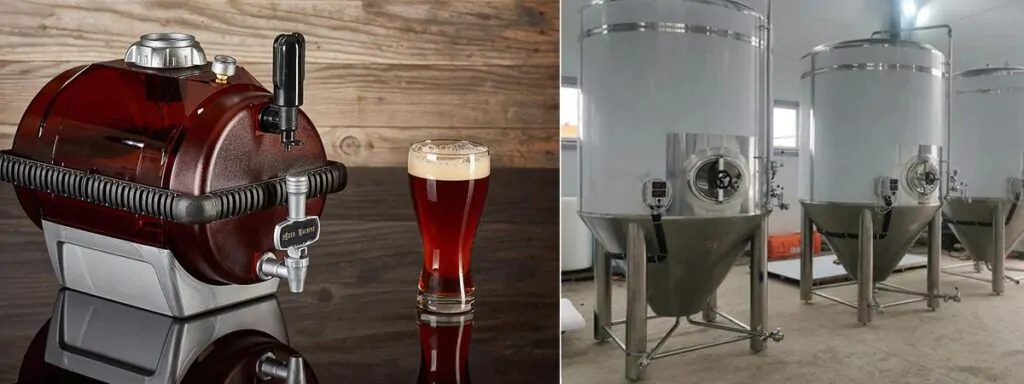
Production of Ceramic heating element
The capacity of the plants and the private bromine jam have different performance parameters. Therefore, the ENs are produced for the actual needs of the technological process. Each released position passes a test to ensure it can withstand future loads.
Heaters differ in size, shape, type of materials. Their task is to achieve and maintain the temperature corresponding to the final product manufacturing mode. Due to the durability of the use of heating elements are considered the best solution for thermal stages in the preparation of beer. Water heating for malt production, wort production, hop cooking, pasteurization – all these stages require a certain temperature regime
Types of heating elements for brewing
The material used for the manufacture is the one permitted in the food industry. The product is not oxidized in contact with the raw material. Each type of device performs its task.
- Water heating for welding. Tubular heaters in the amount of 2-5 pieces are connected in blocks and fixed on a common flange. The low-temperature type eliminates binding of the mass.
- The heater in the evaporation sector. It consists of their current conductive wire and ceramic coating, resistant to long and elevated temperatures. At the request of the customer all components are placed in a shell made of metal.
- Heat resistant sterilization device. Ceramic infrared models are developed.
- Dryers for temperature shrinkage in the packaging sector. Here are used infrared convex type radiators with increased power.
Dry fuel elements used in the wort bowl do not change the quality of the fermented mixture, do not affect the taste features of the beverage varieties. They are only transferring their energy potential, which helps to prepare semi-finished products.
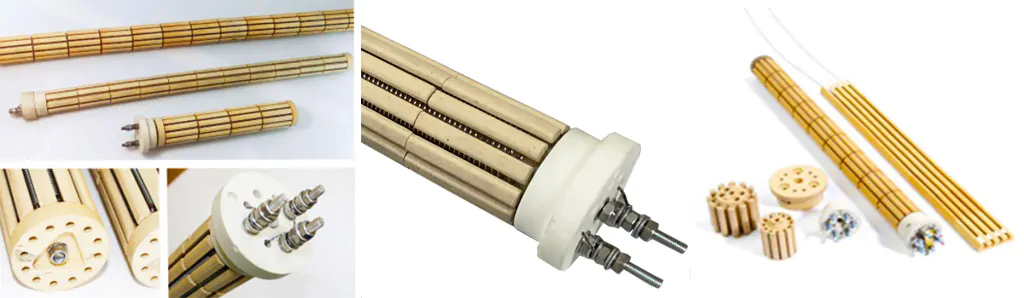
How to calculate the number of heaters and the required power? Consider the volume of the vat, the heating rate and the boundary temperature. Depending on the type of beer tank, its size depends on the geometric characteristics of installed heaters. Violations of the production card caused by insufficient heating wort and future beverage can completely spoil the taste of the finished product.
II. Measurement of oil temperature by dry heaters
If you take a metal heater with a spiral and dielectric component inside, put it in the oily fraction, this design will cause the technical oil to burn. Ceramic analogues of «dry type» have a metal flask, inside which there is a heating plant. Therefore, the heating element itself does not change the structure of the oil, but only heats the shell, the heat from which is transmitted to a viscous medium.
TEN is connected to the current supply. Its energy is transferred to the thermal potential distributed over the oil medium.
The difference between oil heaters is the limitation of temperature limits. To prevent a fire in the bath, radiator or other container, the heating temperature is set to +250 C. Regulators and thermocouples help to check the current level of the thermal indicator.
Tubular type heaters are produced according to individual orders and calculations. Each species has a specific diameter, length, configuration, and permissible voltage values. Attention is also drawn to the size of incorporation of the rods. The length of one piece does not exceed 6 m and the width is 18 mm.
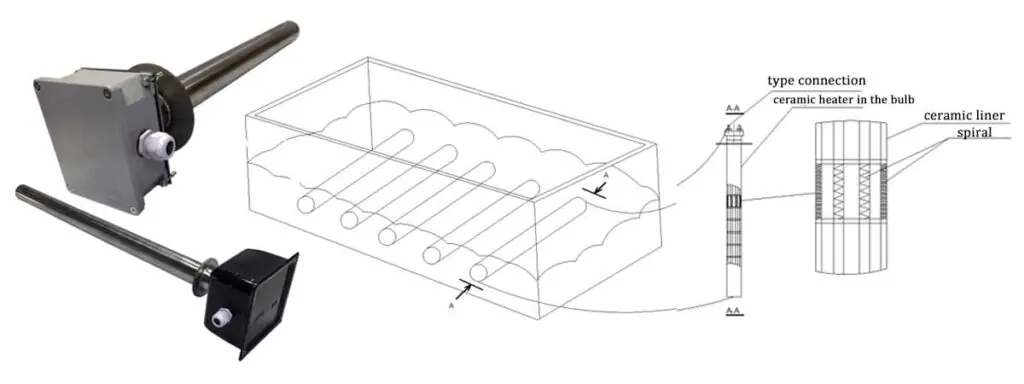
Ceramic heaters that have completed their term, change without draining the oil medium. This makes the downtime minimal. The mortar pieces are characterized by their fixed position and submersible ability to move the heaters in space.
Embedded and submersible models of ceramic oil heaters
Bitumen, motor fuel and other distillation products are also heated. Otherwise, they are more dense, which prevents the collection and transfusion of oily products. Transportation of oil assortment by rail at any time of the year is possible only in the presence of submersible or embedded fuel elements. During operation, they provide the required flow of mixtures. Oily preparations are often used in factory conditions.
Mortise products are mounted through holes on the body: the thermal part is placed inside, terminal boxes remain outside. Submersible analogues are placed inside the containers and then pulled out when the required parameters are reached.
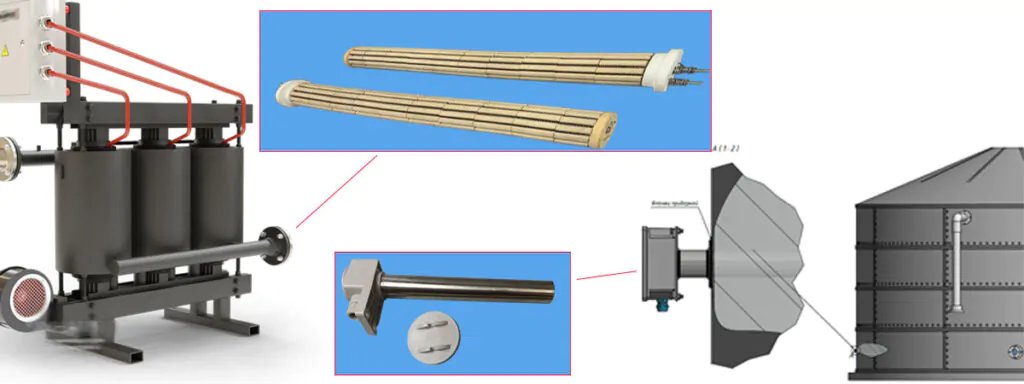
Submersible heaters maintain the consistency of the environments, help to avoid the stratification of the media with precipitation, forming proper storage conditions. They are quite economical, exclude condensation processes. Do not need complex maintenance, reduced the probability of failure. When you need technical inspection, cleaning, they are easy to remove. Wide range of use, significant speed of heat transfer and distribution to tanks, tanks, tanks are highly valued in industrial use.
Submersible models are characterised by their heating accuracy. They are simpler than mortise models, whose priority is expressed more in closed tanks. If necessary, tanks simultaneously use both types of heaters
In submersible and mortise products values environmental friendliness. By connecting to the current-producing area, they do not produce harmful choices. This means that there is no need for powerful ventilation and pipes for the removal of burned gaseous waste.
Design and operation features
The number of pipes on the flange varies from 1 to 9. The steatine blocks through which a heating wire helix is passed, securely isolate the heating elements, preventing the oxidation of the medium. Temperature is gradually rising and speed is being maintained at capacity. Sensors measure the actual performance of the fuel cell, then they are transferred to the thermal control component and the automation cabinet. As soon as the temperature reaches the limit value, the blocking of the heater is triggered.
- The placement of the heaters in the container extends its life, makes it possible to use the products in liquids with different viscosity.
- No tar or bitumen combustion products are formed during operation, there are no traces of coking and carbon on the active surface of the fuel cell
- Heating is uniform, without the presence of air jams, which ensures the correct conduct of thermal operations.
- By doing the calculations, you can create an oil heater that will have cold and hot spots
To order ceramic dry fuel cells in «INTMAX Group», fill in the online application form at the link.
Fixation of dry heaters for oil media
Fixings are proposed to be made according to one of 3 schemes.
- Under the flange. It is possible to separately remove the flask and heater. In this method, a gasket from the peritonite is added, which provides increased tightness.
- Under the clutch. The threaded type of clutch creates conditions for the extraction of the TN itself and the bulb into which it is placed.
- Welding. The heater in the shell is placed on the wall by welding. Everything is fixed here, they change the fuel only when its working resource has run out.
III. Dry type ceramic heaters for reactive media
Medical industry, galvanic direction, spheres of manufacture of herbicides, insecticides, direction of waste processing use heating technologies in the presence of reactive components. For such liquids and dense analogues, it is necessary to select special heaters. They retain the original composition of the medium, but do not corrode themselves.
If you look at ceramic heaters, they can interact chemically with heated substances, quickly breaking down. To buy a heater for special conditions of use is very problematic. Therefore it is right to make a heaters on order in the company «INTMAX Group». We will take into account the type and concentration of the solution, the initial and desired temperature, the duration of maintaining a stable temperature
Outdoor materials for heaters used in aggressive environments
Ceramic products are enclosed in a special resistant shell. Let us list other materials that are also used to create fuel cells.
- Zirconium. Can withstand significant amounts of acids and alkalis.
- Lead. Can withstand without damage the action of hydrofluoric, sulfuric and phosphoric acids.
- Cartridge-type direct heaters are often inserted into the quartz cylindrical cup. But they are prohibited by the alkali base hydroxides.
- Lead, copper and stainless steel will help in mildly acidic solutions.
- When you need chemical stability and heating speed, pay attention to titanium
- The best dielectric, inert to 90% of the compounds, is PTFE. It is capable of qualitatively protecting the working area of the fuel cell at negative and positive temperatures.
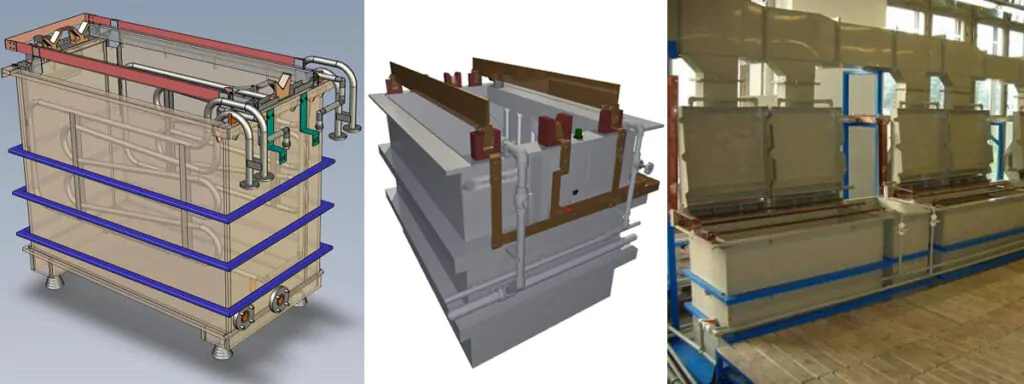
In the industrial sector, galvanic baths are in demand. The heater is fixed on the outer side to extend its life and ensure quick replacement if necessary. Also, this method of attachment allows to create areas with heated and cold areas.
IV. High demand for dry ceramic heaters
Steate products have good performance
- The tight seal of the heating spiral is retained when heaters are used under vibration loads.
- Ceramic is convenient for its heat-preserving ability. After the electrical connection is deactivated, accumulated heat continues to be released into the environment.
- Oxidation processes do not affect the core of the fuel cell, so it is subject to updating less often than in the «wet» version of execution.
- The universal models are designed for a voltage of 220 V. For the industrial scale of such devices are not enough, so produced analogues up to 660 V.
- There are misconceptions about the low heat transfer from the resistive wire to the heated medium. The distance between the heating element and the bulb wall does not exceed 0.2 cm. Therefore, there is no dissipation of energy inside the heating element.
Interested in ordering «dry» and «wet» heater, please contact any day of the week. Please use the contact number and the application form to contact us.